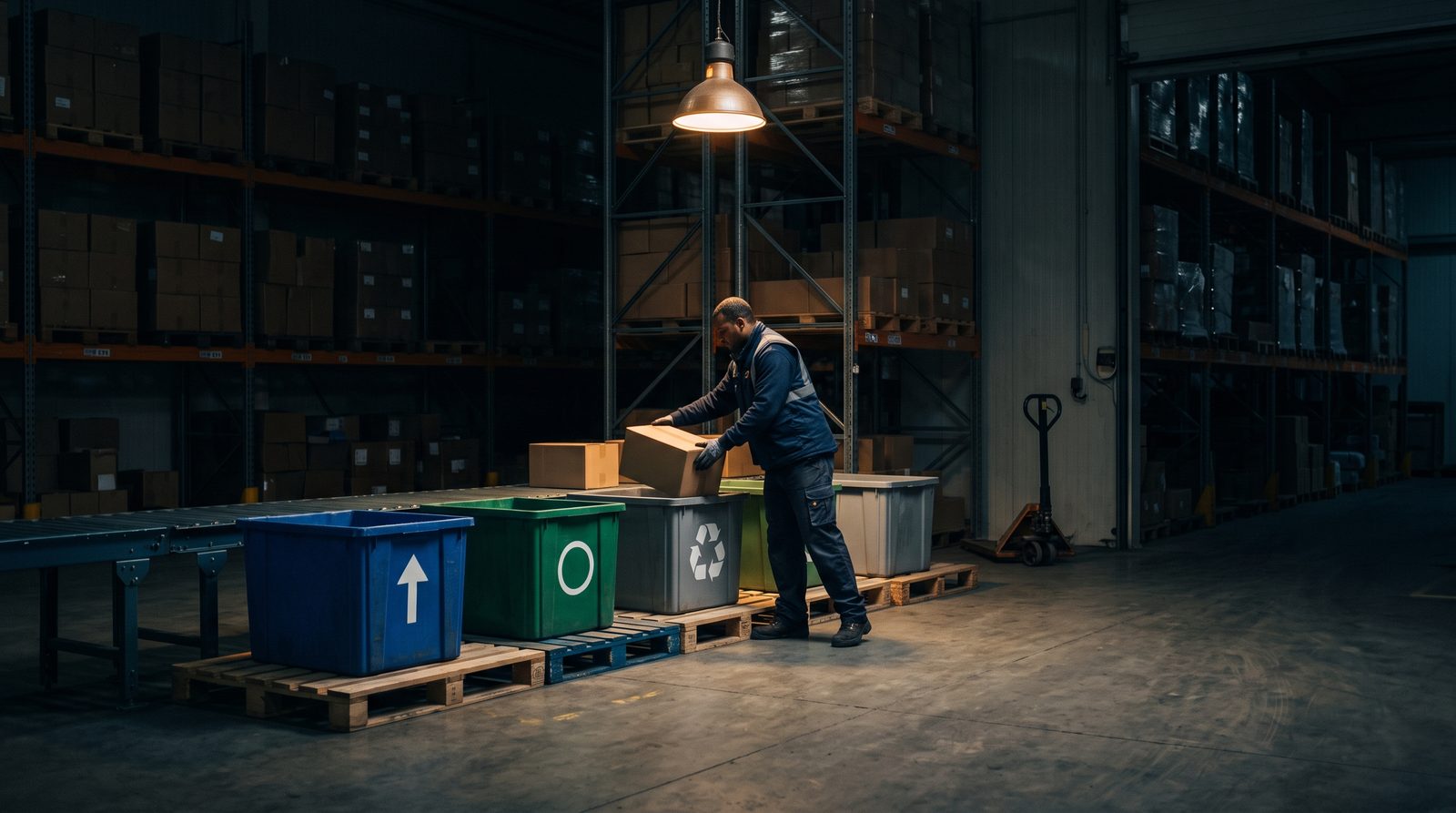
Circular commerce shows up in a lot of retail conversations as a sustainability initiative, something a brand does for its environmental story rather than its bottom line. That framing misses what is actually happening on the warehouse floor, and it undersells the opportunity.
For anyone processing returns, circular commerce is not a value statement. It is a set of disposition decisions that either recover margin or do not. Every returned item that gets written off as a loss, when it could have been resold, refurbished, or routed for parts, is money that already left the building and never came back. That is an operations problem with a sustainability side effect, not the other way around.
Where the margin actually lives
Why the distinction matters
An operation that treats circular commerce as a brand initiative bolts it on as a side project. An operation that treats it as a disposition and margin question builds it into the receiving workflow itself, so every item gets routed to its highest-value outcome by default, not by exception.
That is the model Returns Desk is built around. Disposition routing happens at the point of grading, not as a separate downstream project.
Circular commerce done right is not a trend a warehouse adopts. It is a margin line most warehouses are already leaving on the table.