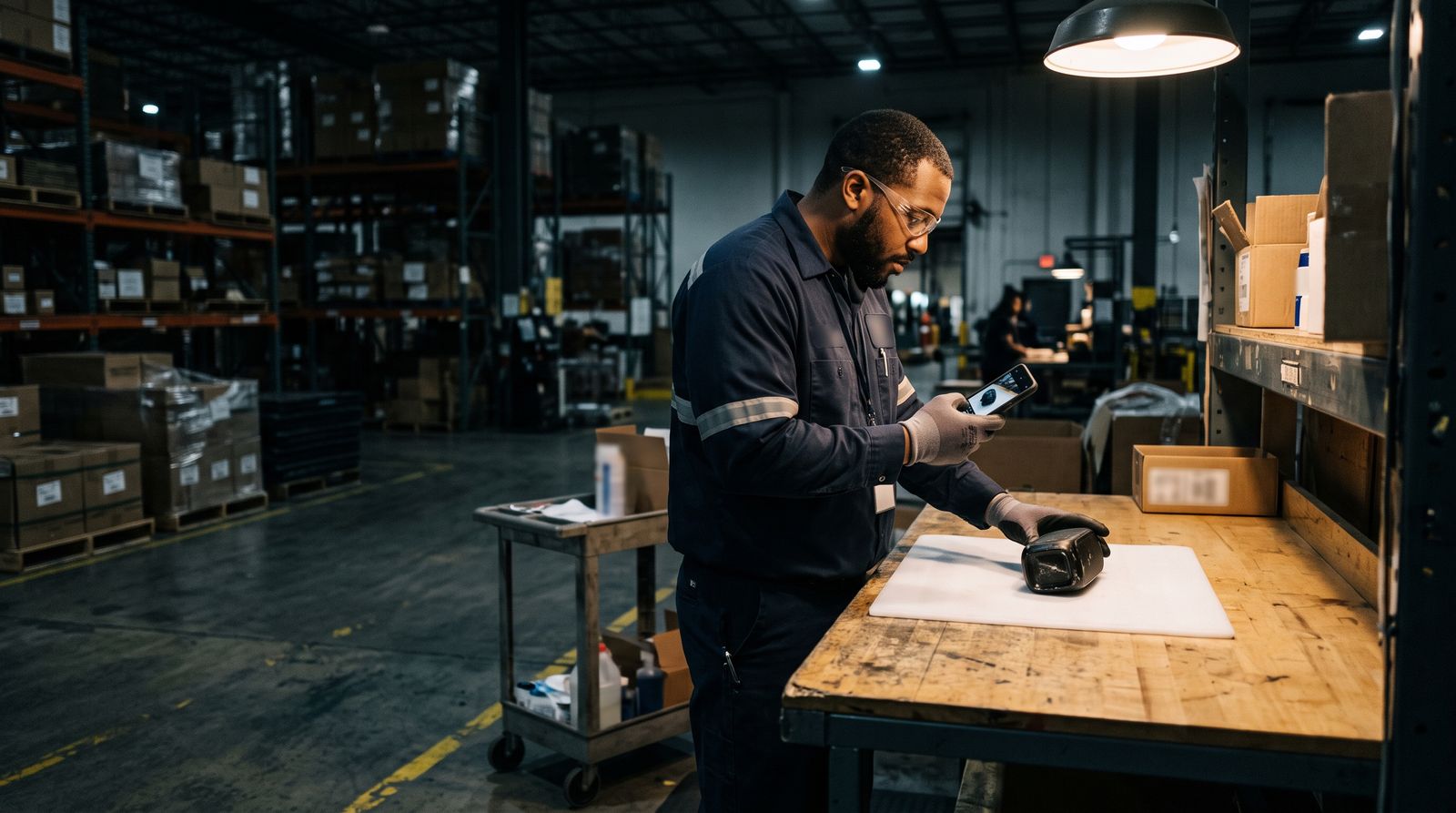
Every 3PL that handles returns has run into this argument. A brand disputes a charge, or disputes a disposition, and it comes down to one person's read on the condition of an item against somebody else's read on the same item. Without documentation behind it, the 3PL loses that argument more often than it should, not because the 3PL was wrong, but because there is nothing to point to when someone pushes back.
We see the same pattern across just about every warehouse we work with. Condition mismatch disputes usually are not about the item at all. They are about the fact that nobody kept a record of it.
Where the argument gets lost
What actually settles it
The 3PLs that stop losing these arguments treat condition grading as a documentation process instead of a judgment call. That means an image captured at receiving, a standardized grading workflow so the same condition gets the same disposition every time, and a record that stays attached to the item through resale, refurbishment, or write-off.
This is exactly the gap Returns Desk closes. Every item processed through the platform captures an image and a grading record at the point of inspection, tied to a timestamp and a specific disposition, so when a brand disputes a charge, the 3PL has something to show them instead of something to argue.
If your team is still settling condition disputes with a phone call and a memory, that is a solvable problem, and it is usually faster to fix than most people expect.