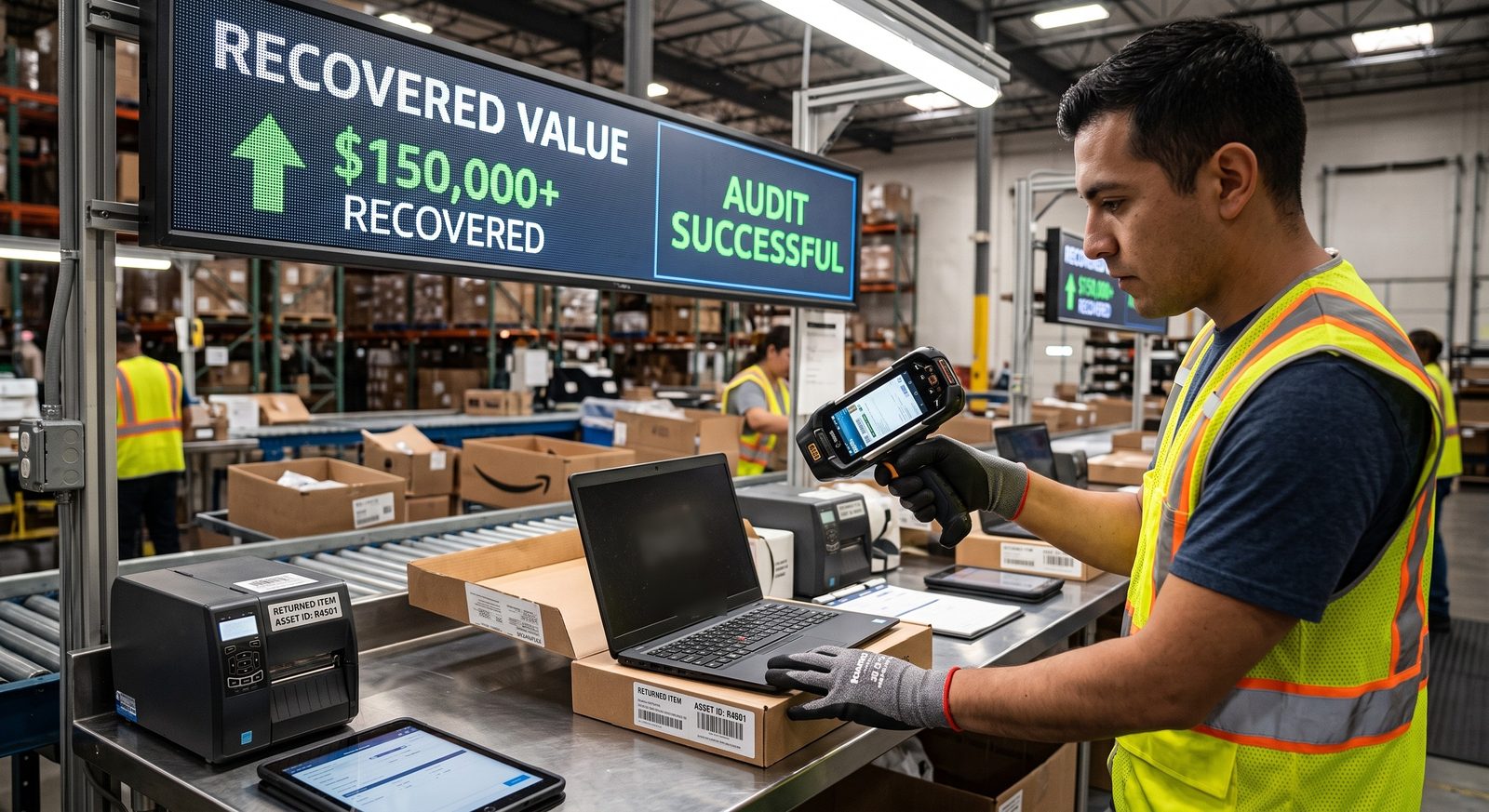
We Found $150,000 in Returns Fraud in Three Months. Here Is What We Saw.
Ian Redlin, CEOJuly 8, 20265 minute read
Nobody audits their returns operation the way they audit their forward fulfillment. That asymmetry is exactly how fraud survives.
When a client came to us with a returns process they described as "mostly working," we started looking at the data differently. Three months later, we had documented more than $150,000 in recovered value that had been disappearing quietly, item by item, shift by shift.
Here is what the patterns looked like, and what to watch for in your own operation.
The five fraud patterns we see most
Empty box returns.
A customer sends back a box with the correct return label, original packaging, and a weight that passes a casual check. The product inside is missing, substituted, or broken. Without image capture at the point of receipt, there is no documentation to support a claim. The 3PL absorbs the loss or the dispute drags for weeks.
Wrong item returned.
Customer sends back a similar item, a cheaper version, or an item from a different brand entirely. Without item-level scan and UPC lookup at receiving, this goes unnoticed until someone physically unpacks a batch.
Used condition returned as new.
Common in apparel, electronics, and personal care. No wear indicators are noted on receipt. The item re-enters sellable inventory. The next customer receives a used product and files a complaint.
Serial number mismatch.
High-value electronics and accessories are returned with serial numbers that do not match the shipped item. Without serial capture at the receiving step, the fraud is invisible until someone reconciles manually, which often never happens at the warehouse floor level.
Duplicate claim fraud.
A customer files a return through the portal and also initiates a chargeback with their bank. Without a return receipt with timestamp and image proof, the 3PL has no documentation to contest the chargeback.
How Returns Desk builds the case
Every return processed through Returns Desk captures images and inspection proof at the point of processing. When a fraudulent return is identified, a specific disposition is applied and a full report is generated with images, inspection details, and chain of custody, exportable as a PDF ready to submit for claim recovery.
One client recovered $150,000 in documented fraud claims within the first three months. That is not a projection. That is a result.
If your returns operation does not have grading audit trails and exception flagging, you do not know what you are losing. The question is not whether fraud is happening. The question is whether you have the documentation to do anything about it when it does.
Keep reading
Now run the same math on your cost per return.
Our companion piece breaks down where the money goes in a manual returns operation.